In B2B sales, every conversation starts with data. Whether you're identifying prospects, reaching decision-makers, or building long-term customer relationships, the quality of your data directly influences your results.
Unfortunately, many sales teams still rely on outdated contact lists, incomplete company records, and fragmented databases. Instead of focusing on selling, they spend valuable time verifying information, correcting errors, and chasing prospects who are no longer relevant.
As competition continues to grow, accurate business data has become more than just a convenience—it's a competitive advantage.
What Is Data Quality?
Data quality refers to how accurate, complete, consistent, and up to date your business information is.
High-quality sales data includes:
- Verified company information
- Accurate decision-maker contacts
- Complete business profiles
- Current product and industry details
- Reliable certification and compliance information
When sales teams work with trusted data, they can engage the right prospects with greater confidence and efficiency.
The Hidden Cost of Poor Data
Poor-quality data impacts every stage of the sales process.
Sales representatives spend hours researching prospects instead of building relationships.
Marketing campaigns target outdated contacts, reducing engagement and return on investment.
CRM systems become cluttered with duplicate records and incomplete information, making reporting less reliable.
The result is lower productivity, missed opportunities, and slower revenue growth.
Even a small percentage of inaccurate data can create significant inefficiencies across the organization.
How Poor Data Affects B2B Sales
Missed Opportunities
Outdated contact information means sales teams often reach the wrong person—or no one at all.
When decision-makers change roles or companies, valuable opportunities are lost before conversations even begin.
Lower Sales Productivity
Every minute spent verifying business information is time that could have been spent prospecting, following up with leads, or closing deals.
Manual research slows the sales cycle and limits the number of opportunities each representative can pursue.
Inaccurate Targeting
Without verified company data, businesses risk targeting organizations that don't fit their ideal customer profile.
Poor targeting leads to lower conversion rates and wasted marketing and sales resources.
Reduced Customer Confidence
Incorrect company names, outdated contact information, or inconsistent records can create a poor first impression.
Accurate data helps sales teams communicate professionally and build trust from the very first interaction.

Also Read: The State of B2B Data Intelligence in 2026: 5 Trends Every Business Should Watch
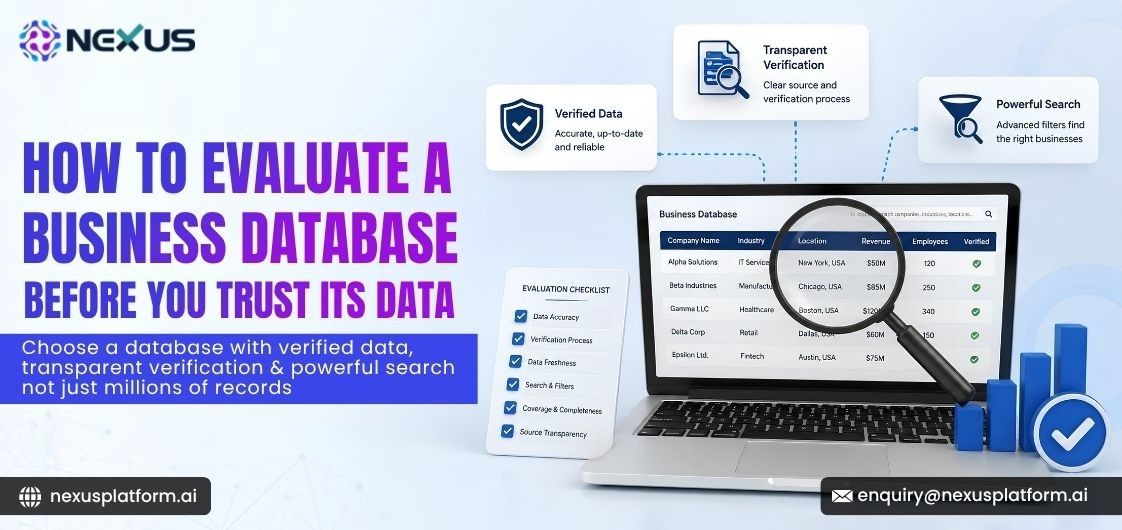
What High-Quality Business Data Looks Like
Modern B2B sales teams need more than a list of company names and email addresses.
They need business intelligence that is:
- Verified and continuously updated
- Complete and standardized
- Free from duplicate records
- Easy to search and filter
- Ready for immediate use
Reliable data allows sales professionals to spend more time selling and less time managing spreadsheets.
How AI Improves Data Quality
Artificial intelligence is transforming the way businesses manage sales data.
Instead of manually reviewing thousands of records, AI can automatically:
- Detect missing fields
- Remove duplicate entries
- Correct formatting issues
- Identify inconsistencies
- Improve overall data accuracy
By automating these tasks, AI reduces human error while ensuring sales teams always have access to clean, reliable information.
The result is faster workflows, higher productivity, and more confident decision-making.

Also Read: The Future of Sales Intelligence: Why Connected Data and AI Matter More Than Ever
How Nexus Helps Sales Teams Succeed
Nexus is designed to help businesses overcome the challenges of poor data quality by providing verified, AI-powered business intelligence.
Its intelligent platform combines companies, decision-makers, products, ingredients, and certifications into one centralized ecosystem.
With AI-powered data validation, Nexus automatically detects duplicate records, missing information, and formatting issues before they affect sales activities.
Automatic data mapping simplifies imports, while continuously updated business intelligence ensures teams always work with current information.
Instead of managing multiple spreadsheets and disconnected databases, sales teams gain access to trusted data that supports better prospecting, improved targeting, and stronger customer engagement.
Conclusion
In today's competitive B2B environment, data quality is just as important as sales strategy.
Even the most experienced sales professionals struggle when working with outdated or inaccurate information.
Verified, AI-powered business data helps organizations improve productivity, reach the right decision-makers, strengthen customer relationships, and generate better business outcomes.
With intelligent data validation and continuously updated business intelligence, Nexus empowers sales teams to replace guesswork with confidence.
Because better data doesn't just improve sales—it drives smarter business decisions and sustainable growth.