If you've ever evaluated a B2B database platform, you've probably sat through the same product demonstrations.
One vendor talks about millions of company records. Another highlights CRM integrations. Someone else promises the most accurate contact database on the market. On paper, every platform seems to solve the same problem.
Yet, once a business starts using the platform, reality often looks different.
Sales teams discover outdated contacts. Procurement teams struggle to validate suppliers. Market researchers find incomplete company profiles. What looked impressive during the demo suddenly requires manual verification, additional tools, and hours of extra research.
The problem isn't always the platform itself. More often, it's the way buyers evaluate it.
Database size, pricing, and integrations are easy to compare because they're visible. Data quality is harder to measure, yet it's the single factor that determines whether your team can trust the decisions they're making.
Whether you're building a prospect list, identifying manufacturers, researching competitors, or expanding into a new market, every decision starts with one question:
Can I trust the information in front of me? That's the question this guide is built to answer.
Before Comparing Business Databases, Understand What You're Buying
Ask five software vendors to define a B2B database platform, and you'll probably hear five different answers.
Some describe it as a business contact database built for sales teams. Others position it as a company database that helps identify potential customers. A few focus almost entirely on lead generation.
None of those definitions are wrong; they're simply incomplete.
A modern business database should do much more than store company names and contact details. It should help users understand how businesses operate by connecting companies with decision-makers, products, suppliers, certifications, manufacturing capabilities, and market activity.
Think of it this way.
A contact record tells you who to reach.
A complete B2B data intelligence platform helps you understand why that company matters, what it produces, which markets it serves, and whether it's the right business to engage with.
That difference becomes increasingly important as organizations move beyond simple prospecting and rely on data for sourcing, procurement, compliance, competitive research, and strategic planning.
Database Size Is Easy to Market. Business Data Quality Is Much Harder to Maintain.
One of the biggest misconceptions in this industry is that a larger database automatically delivers better results.
It doesn't.
Business information starts changing the moment it's collected.
People change roles. Companies relocate. Manufacturers introduce new products. Suppliers gain or lose certifications. Businesses merge, expand, or exit markets.
Without continuous data verification, even the largest verified company database becomes less reliable over time.
That's why experienced buyers rarely ask,
"How many companies do you have?"
Instead, they ask,
"How do you keep your data accurate?"
That single question reveals far more about a platform than any homepage statistic.
Reliable business intelligence isn't built on record counts. It's built on consistent validation, transparent processes, and continuous updates.
Every Vendor Says They Have Verified Business Data. Very Few Can Prove It.
"Verified business data" has become one of the most common promises in B2B software.
But verification isn't a badge. It's a methodology.
When evaluating a platform, don't stop at the word verified. Ask how that verification actually happens.
Strong platforms typically combine several approaches rather than relying on a single source.
They compare information across multiple trusted business sources. They monitor changes to company records over time. AI helps identify duplicate entries, inconsistent data, and missing information, while human reviewers validate complex records that require industry expertise.
No database will ever be perfect. Businesses change too quickly for that.
What matters is whether the provider has a repeatable process for identifying those changes before they affect your decisions.
Transparency matters just as much as technology.
If a vendor can't explain how they maintain their company database, it's difficult to assess the reliability of the information you're purchasing.

A Modern B2B Database Platform Should Answer More Than "Who?"
Most traditional databases answer two basic questions.
Who is the company?
Who works there?
That's useful, but it's no longer enough.
Imagine you're evaluating a manufacturer for a new product launch.
Knowing the CEO's email address won't tell you whether the company produces the ingredient you need, holds the required certifications, or supplies businesses in your target market.
Modern business decisions require context.
That's why today's leading business intelligence platforms increasingly connect multiple intelligence layers into one searchable experience.
Instead of isolated contact records, buyers should expect access to:
- A Verified Company Database with complete business profiles.
- A Decision-Maker Database that identifies relevant stakeholders.
- A Product Database showing products manufactured or supplied.
- An Ingredient Database for sourcing and formulation research.
- A Certification Database to evaluate compliance.
A Supplier Discovery Platform for identifying manufacturing partners.
When these data points work together, they help businesses make faster and more informed decisions without switching between multiple disconnected tools.
How Experienced Buyers Evaluate Data Before Signing a Contract
The best software demonstrations are polished. But the best buying decisions happen after the demo.
Before investing in any B2B database platform, experienced buyers ask questions that reveal how the platform performs in real-world scenarios.
- How frequently is business information updated?
- Can you move from a company profile to related products and suppliers?
- Does the platform clearly explain its verification methodology?
- Can you validate supplier certifications before starting a conversation?
- Does the search experience allow you to filter companies based on products, industries, manufacturing capabilities, or certifications?
- Perhaps most importantly, can you test the platform before making a purchasing decision?
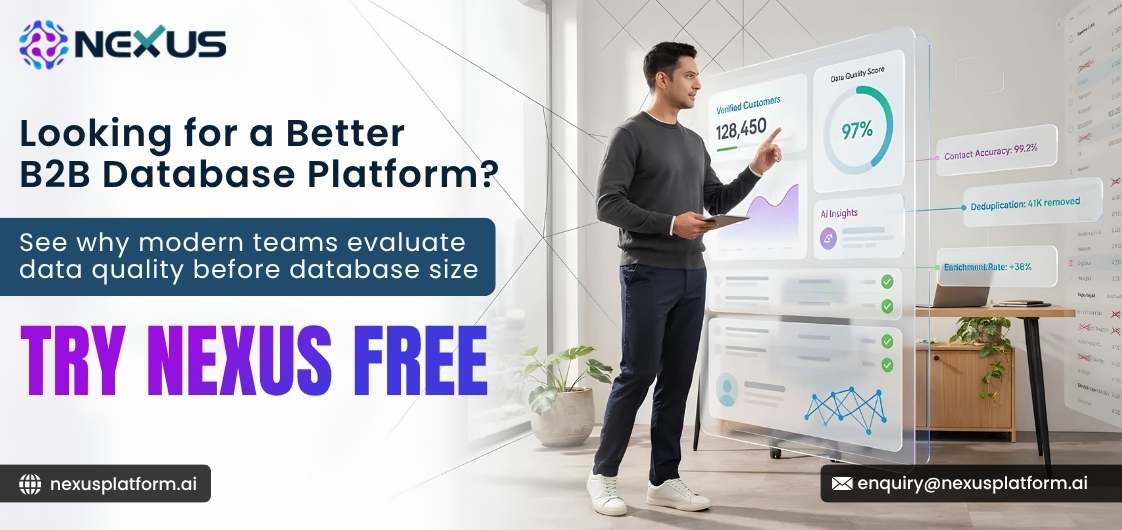
A free trial won't tell you everything, but it will quickly show whether the data supports your day-to-day workflows or simply looks impressive during a sales presentation.
What Features Separate a Good Platform from a Great One?
By now, one thing should be clear: evaluating a B2B database platform isn't about finding the vendor with the biggest numbers. It's about finding the platform that helps your team make better decisions with less effort.
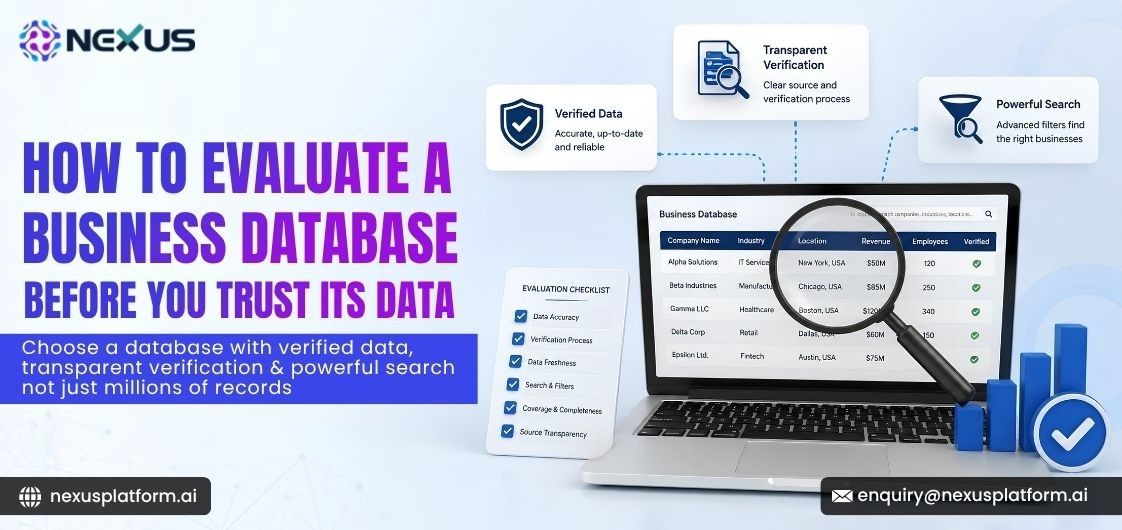
As you compare providers, use this checklist to evaluate what you're getting; not just what's being marketed.

A database only becomes valuable when your team can trust the information enough to act on it.
The Red Flags Most Buyers Don't Notice Until It's Too Late
Most platforms look polished during a demo. The real test begins after your team starts using the data.
Over the years, we've seen buyers focus on features while overlooking the quality signals that matter much more in day-to-day use.
For example, if a vendor can't explain how their data is verified, that's worth paying attention to. Transparency around data verification should never feel like a trade secret.
The same goes for update frequency. Business information changes constantly, and platforms that don't clearly communicate how often records are refreshed can quickly become unreliable.
Another common issue is fragmented business intelligence. A company profile may include contact information but provide no visibility into its products, certifications, or supplier capabilities. That forces teams back to manual research, the very problem the platform was supposed to solve.
Finally, pay attention to the search experience itself. If finding the right company requires multiple searches, limited filters, or manual exports, productivity suffers long before the subscription is renewed.
A good platform gives you data.
A great platform gives you confidence in the decisions you make with that data.
Why Nexus Takes a Different Approach
Throughout this guide, we've talked about what buyers should expect from a modern B2B database platform.
Reliable data.
Transparent verification.
Connected business intelligence.
Context beyond contact information.
That's also the philosophy behind Nexus.
Rather than functioning as another standalone business contact database, Nexus brings together multiple intelligence layers that businesses typically access through separate tools.
Within a single workspace, users can explore a company database, identify relevant decision-makers, review product portfolios, analyze ingredients, verify certifications, and discover suppliers—all while gaining broader market context through AI-powered search and filtering.
For a procurement team, that means evaluating potential suppliers without jumping between company websites, certification portals, and product catalogs.
For a sales team, it means understanding what a business manufactures before reaching out.
For market researchers, it means connecting companies, products, industries, and supply chains instead of reviewing isolated records.
That's the difference between accessing business data and understanding a business.
Final Thoughts
Choosing a B2B database platform isn't about choosing software. It's about deciding which information your business will trust every day.
The right platform should help your team move beyond static contact lists and disconnected datasets. It should provide accurate company profiles, reliable decision-maker information, verified business data, supplier intelligence, product insights, certification visibility, and the market context needed to make informed decisions with confidence.
As you evaluate your options, don't let record counts or marketing claims drive the conversation. Ask how the data is verified. Look for transparency. Test the platform against real business scenarios, not ideal demonstrations.
Because in the end, the value of a business intelligence platform isn't measured by how much data it stores; it's measured by how confidently your team can act on the insights it delivers.