Finding business information has never been easier. Finding accurate business information is another story.
Every day, sales teams, marketers, procurement professionals, and business development managers rely on databases to identify prospects, research companies, and build relationships. Yet many businesses still waste hours contacting outdated leads, emailing inactive addresses, or researching companies with incomplete profiles.
A company database should help you make better decisions not create more work.
So, how do you know whether a business database deserves your trust?
This guide explains the key factors that separate a reliable verified company database from one that simply stores millions of records. Whether you're comparing the best B2B database, evaluating B2B contact database providers, or looking for a business email database, these principles will help you choose wisely.
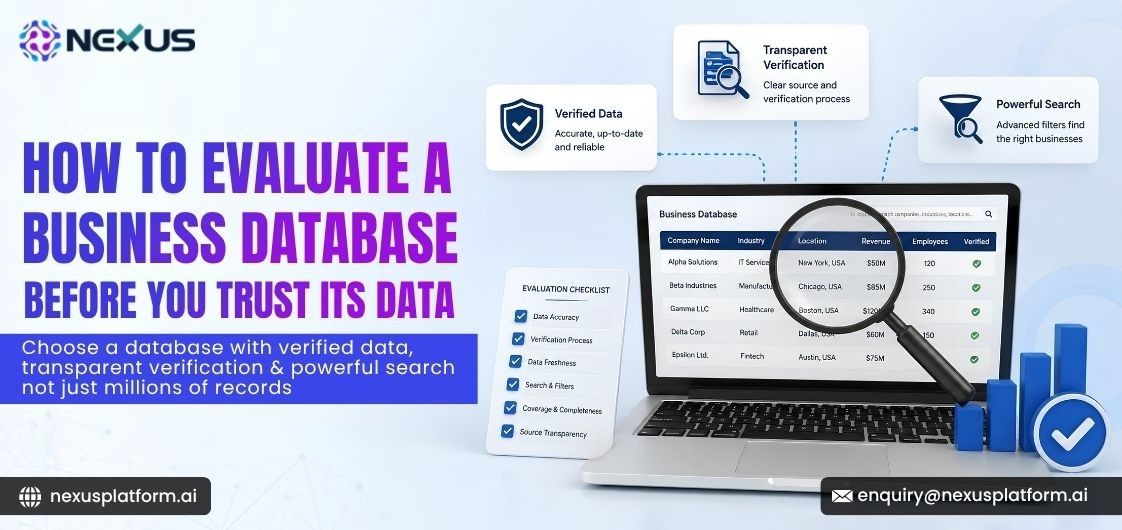
Why Data Quality Matters More Than Database Size
Many database providers advertise impressive numbers.
You'll often see claims like:
- Millions of companies
- Millions of contacts
- Global coverage
- Thousands of industries
Large numbers look attractive, but quantity alone tells you very little.
Think of it like a library. A building with one million books sounds impressive until you discover half the books are outdated or filed under the wrong category.
The same applies to business data.
If your database contains inaccurate contact details, outdated company information, or duplicate records, your sales and research efforts become slower and less effective.
According to research from the IBM, poor-quality data costs organizations significant time and money through inefficiencies, rework, and missed opportunities. While the exact impact varies by organization, the message remains consistent: data quality directly affects business performance.
What Is a Verified Company Database?
A verified company database is more than a collection of company names.
It includes business information that has been validated through reliable sources and updated regularly to improve accuracy.
Depending on the provider, verification may include:
- Company registration details
- Business websites
- Public filings
- Industry classifications
- Contact validation
- Employee information
- Product information
- Certifications
- Geographic data
Reliable providers also remove duplicates, identify inactive businesses, and refresh records over time.
Verification doesn't mean every record is perfect. Businesses change constantly. However, trustworthy providers explain how they collect, validate, and maintain their data.
Look Beyond Contact Information
Many buyers start by searching for a business email database because they want to reach decision-makers quickly.
That's understandable.
However, a business database should provide context not just contact details.
For example, before reaching out to a company, you may want to know:
- What products do they manufacture?
- Which industries do they serve?
- Where are their facilities located?
- What certifications do they hold?
- Are they manufacturers, distributors, or brands?
- Who makes purchasing decisions?
These details help sales and procurement teams prioritize the right opportunities instead of contacting every company on a list.
The best databases support better decisions, not just larger outreach campaigns.
Check How the Provider Verifies Its Data
This is one of the most important questions you can ask.
A trustworthy provider should explain where its data comes from.
Common sources include:
- Official company websites
- Government business registries
- Public regulatory records
- Industry associations
- Verified commercial partnerships
- Public business filings
Some providers also combine artificial intelligence with human quality checks to identify changes and remove outdated information.
Be cautious if a provider only advertises database size without explaining its verification process.
Transparency builds confidence.
Fresh Data Beats Big Data
- Business information changes every day.
- Companies hire new executives.
- Businesses relocate.
- Products change.
- Email addresses become inactive.
Without regular updates, even a large database loses value.
When evaluating a searchable company database, ask questions such as:
- How often is the data updated?
- How are inactive records identified?
- How are duplicate companies handled?
- What happens when decision-makers change roles?
These answers often reveal more than the total number of records.

Evaluate Search and Filtering Capabilities
Finding one company isn't difficult.
Finding the right company can be.
Imagine searching for:
Organic ingredient manufacturers in California with GMP certification that export dietary supplements.
A basic directory may only let you search by company name.
A modern company database should allow filtering by multiple business attributes, including:
- Industry
- Products
- Certifications
- Company size
- Revenue range
- Employee count
- Geographic location
- Manufacturing capabilities
- Export activity
Advanced search saves hours of manual research and improves lead quality.
Does the Database Fit Your Industry?
Not every database serves every business equally well.
A general directory may work for broad prospecting.
Specialized industries often require deeper information.
For example, manufacturers may need:
- Ingredient data
- Product portfolios
- Certifications
- Production capabilities
- Supplier relationships
Healthcare companies may require completely different information.
The best B2B data providers understand their target industries and organize information accordingly.
Industry relevance often matters more than overall database size.
Compare Data Depth, Not Just Contact Count
Many buyers compare providers by asking one question:
"How many contacts do you have?"
A better question is:
"How useful is each company profile?"
Strong business profiles often include:
- Company overview
- Website
- Industry classification
- Products
- Locations
- Employee estimates
- Revenue estimates
- Certifications
- Decision-makers
- Parent or subsidiary relationships
Rich profiles reduce the need to search across multiple platforms.
That means less time switching tabs and more time actually getting work done.
Your browser will appreciate the break.
Accuracy Should Be Measurable
No database stays 100% accurate forever.
Businesses change constantly.
Responsible providers acknowledge this reality instead of promising perfection.
Look for providers that explain:
- Their verification methodology
- Update frequency
- Quality assurance processes
- Record maintenance practices
If these details aren't available, ask before purchasing.
Clear documentation demonstrates confidence in the product.
Final Thoughts
Choosing a business database shouldn't feel like buying a mystery box.
A reliable verified company database helps you find the right businesses faster, verify important information, and make better decisions with greater confidence.
Whether you're comparing the best B2B sales leads database, evaluating best B2B data providers, searching for a trusted business email database, or exploring a modern searchable company database, focus on transparency, verification, data freshness, and relevance instead of record count alone.
The best business database doesn't simply give you more companies.
It helps you discover the right companies.