FasterSupplierdIThe way businesses find prospects, evaluate suppliers, and make strategic decisions has changed significantly. B2B data intelligence trends 2026 point to one clear shift: success no longer depends on who has access to the most data. It depends on who has access to the right data at the right time.
For companies operating in food, nutraceuticals, dietary supplements, and functional ingredients, outdated contact lists, disconnected spreadsheets, and manual research create real costs. A missed certification renewal or a stale decision-maker record can derail a deal that took months to build. As markets grow more competitive, organizations are turning to smarter data intelligence platforms that deliver verified, actionable insights instead of raw, unfiltered information.
Here are five trends shaping this shift, and what they mean for how your team sources, sells, and makes decisions in the year ahead.
Together, these trends point toward a broader shift in how businesses think about data itself. It is no longer treated as a static asset to be stored and occasionally referenced. It is treated as something that needs to be continuously verified, connected, and acted on.

Why Data Intelligence Has Become a Competitive Advantage
Business data used to be a support function, something sales or marketing pulled from occasionally. That has changed. Every department, from procurement and compliance to business development and leadership, now relies onaccurate, current information to make informed calls.
A modern B2B data intelligence platform does more than store records. It verifies information, surfaces relationships between companies and people, tracks changes over time, and turns fragmented datasets into something a team canactually acton. Businesses that adopt these capabilitiesidentifyopportunities faster, cut operational costs, and adapt to market shifts with more confidence than competitors still working off static lists.
Also Read : How To Find Verified Ingredient Suppliers Faster
Trend #1: AI-Powered Prospecting Is Replacing Manual Research
Many organizations still rely on separate solutions for contact databases, supplier directories, certification lookups, CRM systems, and spreadsheets.
The result is fragmented information, duplicated work, and inconsistent data across teams.
Businesses are now consolidating these workflows into unified intelligence platforms that combine companies, decision-makers, products, ingredients, and compliance information within a single ecosystem.
This centralized approach improves collaboration, increases productivity, and enables teams to work from one trusted source of truth.
Trend #2: Verified Data Is Outweighing Database Size
or years, the pitch from most data vendors was simple: bigger database, better value. That thinking is fading fast.
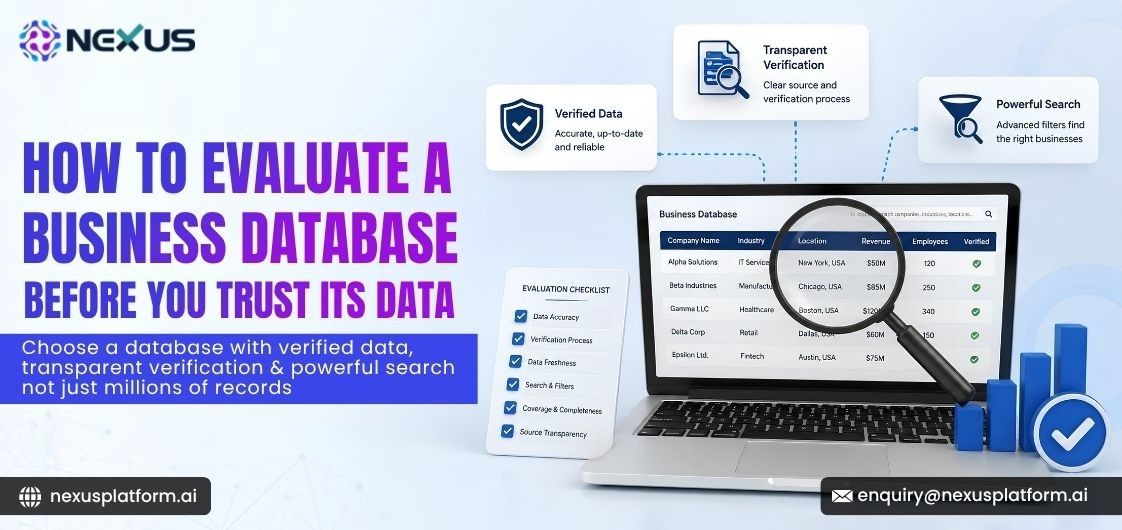
A database with millions of records is not worth much if the decision-maker listed left the company two years ago, the certification shown has since expired, or the business itself has closed. Scale without accuracy just multiplies the noise.
What businesses are prioritizing instead is verified business data that is:
- Refreshed regularly rather than left static
-- Ready to use without additional cleanup
Reliable data cuts down on wasted outreach, sharpens campaign performance, and gives teams more confidence in the decisions built on top of it.

Trend #3: Compliance and Certification Intelligence Is Shaping Sourcing
In regulated industries, choosing a supplier is not just a matter of comparing price sheets. Certifications, regulatory compliance, product quality, and general operational credibility all factor into the decision, often before price even enters the conversation.
Having fast access to verified certification records helps procurement teams cut down on sourcing risk, move vendor approvals along more quickly, and stay aligned with industry standards without chasing paperwork. As regulations continue to shift and tighten across food, nutraceutical, and supplement categories, compliance and certification intelligence is becoming a core part of how sourcing decisions get made, not an afterthought bolted on at the end. Teams that can verify a certification in minutes rather than days move faster than competitors still waiting on manual confirmation from a supplier.
Trend #4: Unified Business Intelligence Platforms Are Gaining Ground
Many organizations still juggle separate tools for contact lists, supplier directories, certification lookups, and internal spreadsheets. The result is predictable: fragmented information, duplicated effort, and numbers that do not match from one team to the next.
Businesses are increasingly consolidating these workflows into a unified business intelligence platform that brings together companies, decision-makers, products, and certification information in one place. This kind of centralized structure improves collaboration between teams and gives everyone a single, trusted reference point instead of five slightly different versions of the truth.
Trend #5: Real-Time Business Data Is Becoming the Expectation
Business information changes constantly. Companies expand into new markets, launch new products, bring on new executives, earn new certifications, or quietly shut down. A database updated once a quarter is already behind.
Static records age quickly, and organizations are starting to expect platforms that refresh continuously rather than on a fixed schedule. Real-time business data improves prospecting accuracy, lowers compliance risk, and lets businesses make calls based on what is happening in the market right now, not what was true six months ago.
This matters most at the moments that count :right before a sales call, during a vendor approval, or when a compliance audit is underway. A record that was accurate last quarter is not much help if a certification has since lapsed or a decision-maker has moved on.
How Nexus Supports These Shifts
Keeping pace with these trends takes more than a traditional contact list. It takes a platform built around verified, connected data.
Nexus is built specifically for companies working in the B2B food, nutraceutical, dietary supplement, and functional ingredient space. It brings together companies, decision-makers, products, and ingredient data within a single platform, with a focus on data validation and certification intelligence so teams are not left cross-checking information manually.
Whether you are identifying qualified prospects, checking a supplier's certification status, or researching a new market, having that information verified and in one place changes how quickly your team can move.
Conclusion
The future of B2B growth is not about collecting more information. It is about turning information into something usable. As AI-driven research, verified records, compliance insight, unified platforms, and real-time updates become standard expectations, businesses that modernize their approach to data will hold a real edge over those still working from static lists.
Following these B2B data intelligence trends for 2026 is not just about staying current. It is about building a data foundation that supports faster, more confident decisions across sourcing, sales, and compliance, for this year and beyond.