Sales and sourcing teams in food, nutraceutical, dietary supplement and functional ingredient businesses lose hours every week to outdated contact lists and manual research. A B2B lead generation data platform solves this by combining a verified decision-maker database with ingredient, certification and compliance data in one searchable system built for these specialized industries.
What Is a B2B Lead Generation Data Platform?
A B2B lead generation data platform is a centralized system that helps businesses discover, verify and organize information about companies and decision-makers. It replaces scattered directories and spreadsheets with one verified decision-maker database, giving sales and sourcing teams a single source for accurate company and contact information.
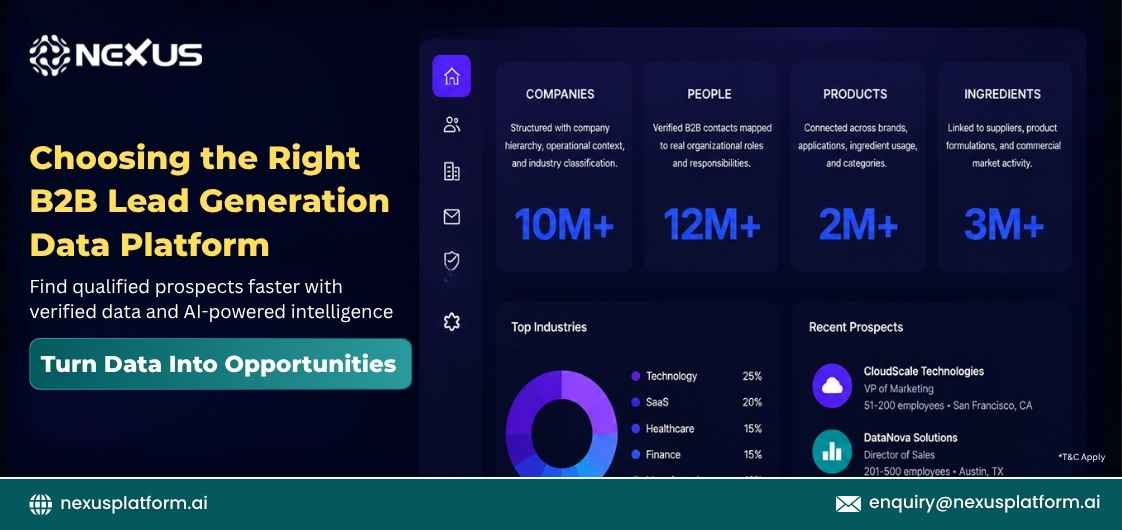
A strong platform typically brings together:
- Verified company profiles
- Decision-maker contact data
- Product and ingredient insights
- Certification and compliance records
- Advanced search and filtering tools
The goal is simple: help teams find the right opportunities faster, with more confidence in the data behind them.

Why a B2B Lead Generation Platform Matters
Manual research leaves teams working with inaccurate contact information, duplicate records and outdated company details. A B2B lead generation platform matters because it keeps information verified, connected and current, helping teams find qualified prospects faster and make sourcing and sales decisions with more confidence.
For sales teams, that means reaching a decision-maker database built around real, current contacts rather than a static list that goes stale within weeks.
Key Features: Verified Data, AI-Powered Validation and Advanced Filtering
The strongest platforms combine three things: continuously verified B2B contact data, AI-powered data validation that catches errors automatically, and advanced filtering built around ingredients and certifications. Together these features turn a static contact list into a live, searchable system teams can trust.
Verified Company and Contact Data
Accurate information is the foundation of successful prospecting. Look for platforms that continuously verify company records and decision-maker details rather than refreshing them on an annual or quarterly cycle.

Also Read: The Future of B2B Search: Why Businesses Need a B2B Data Intelligence Platform
AI-Powered Data Validation
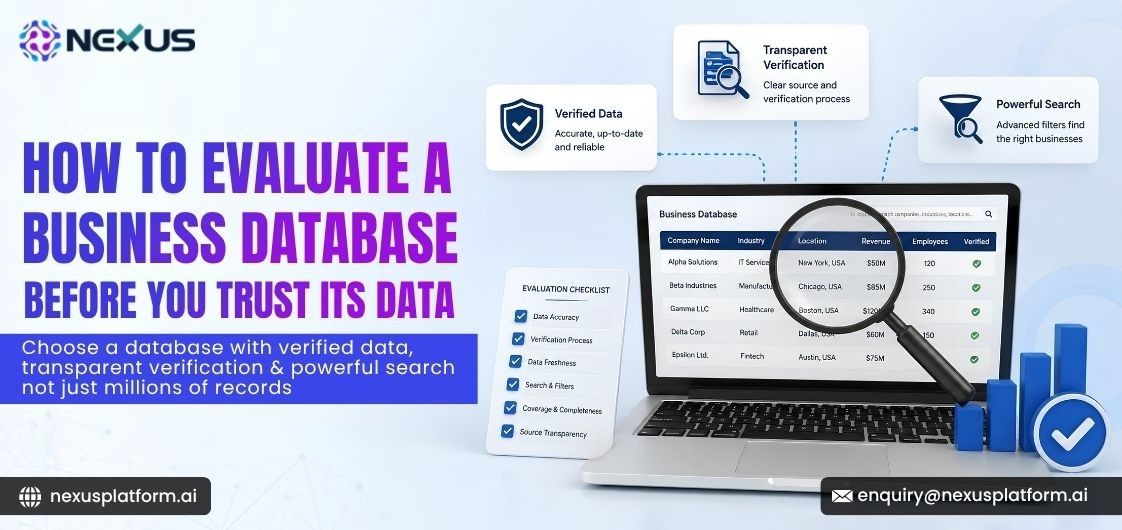
AI-powered data validation is what separates a modern platform from a static directory. Instead of relying on manual review, AI systems flag missing fields, duplicate entries, formatting errors and inconsistent records automatically. Reliable data also depends on ongoing data freshness and data accuracy checks, since a platform that updates every few minutes looks very different in practice from one that refreshes monthly.
Advanced Search and Filtering
The best platforms let teams search using highly specific criteria: industry, location, company size, product category, certification type and ingredient sourcing data. For businesses in the food and supplement space, this kind of filtering is what makes supplier discovery actually efficient. Certification and compliance data deserves particular attention here, since filtering by GMP, Organic, Halal or Kosher status up front saves procurement teams from verifying each one manually later.
Seamless Data Import
Uploading existing business data should be simple, not a multi-day project. Automatic column mapping and intelligent file recognition reduce onboarding time so teams can start working with the platform instead of preparing for it.
Built for the Food, Nutraceutical and Supplement Industries
Generic B2B databases work for broad markets but fall short in specialized ones. A data platform for the food and supplement industry needs to understand ingredients, certifications and supplier relationships, which is why coverage across 130+ industries at this level of depth sets a platform apart from a general-purpose contact database.
Consider a sourcing team trying to find suppliers of a specific plant-based ingredient with organic certification in a particular region. A generic contact database can surface company names, but it has no way to filter by ingredient or certification status, so that work still happens manually, supplier by supplier. An industry-specific platform can return a filtered list in seconds, complete with certification status and the right contact to reach.
Before selecting a provider, ask yourself a few important questions.
How to Choose the Right B2B Lead Generation Platform
Three questions separate a platform built for niche industries from one simply adapted to fit them: does it cover your industry specifically, how frequently is the data updated, and can it scale with your team. Answering these honestly is more useful than comparing feature lists alone.
How Frequently Is the Data Updated?
Business information changes constantly.
A platform that updates regularly can help ensure your team is working with current information rather than outdated records.
Can It Scale With Your Business?
As your organization grows, your data needs will too. Reviewing a B2B data platform pricing comparison alongside a scalability check helps confirm you're evaluating the best B2B lead generation platform for the food industry, not just the most familiar one, and the same questions apply directly to any lead generation platform for supplement brands.
What You Gain From the Right Platform
Teams that adopt the right B2B prospecting tools typically see faster prospect discovery, better-qualified leads and stronger market intelligence across sourcing and sales. The time saved on manual verification gets reinvested in building relationships and pursuing the opportunities that matter.
Instead of spending hours double-checking contact details, teams can spend that time on outreach and relationship-building.
Also Read: What Practices Help Top Brands Move Faster in Product Development
How Nexus Verifies Its Data
Every record in the Nexus database moves through a three-stage verification process: automated AI validation, cross-reference against public and licensed data sources, and a periodic manual spot-check by the Nexus data team. This process is what keeps the decision-maker database current instead of static.
Records are re-verified on a rolling basis rather than a fixed quarterly cycle, so a lapsed certification or a decision-maker's role change surfaces in days, not months.