Innovation is shifting in the nutraceutical and broader functional ingredient space. Instead of slow research cycles built on supplier calls, scattered documents, and manual checks, teams now move faster by relying on structured information. Product development is increasingly tied to how effectively a company manages ingredient data, supplier intelligence, and certification records.
For R&D teams, sourcing managers, and commercial teams working with complex datasets, the speed of decision-making depends on data quality. As workflows evolve, leading brands are adopting a more organized, technology-driven approach, moving from spreadsheet-heavy processes to unified B2B data platforms that centralize company, ingredient, and certification information.
This article looks at what actually helps nutraceutical product development move faster, and the role tools like an ingredient data system or a verified supplier database play in strengthening those workflows.
Why Leading Brands Are Prioritizing Structured Data and Supplier Intelligence
The most agile teams in product development share one advantage: they depend on information that is structured, verified, and easy to interpret. Rather than stretching timelines on routine formulation research, they focus on precision.
Key practices include using ingredient datasets tied to verifiable sources, reviewing certification records early in the cycle, accessing supplier intelligence for R&D through one consolidated system, and bringing AI-supported workflows into early-stage research.
This shift helps teams shorten evaluation cycles and reduce the risk of working with outdated supplier information. A platform such as Nexus supports this model by combining company profiles, ingredient data, certification information, and decision-maker contacts into one dashboard, so teams use a single reference point for sourcing, validation, and preliminary research instead of moving between disconnected systems.
Which Brand Segments Are Moving Fastest
Several product categories consistently move faster because their workflows depend on accurate datasets and clear certification pathways.
Functional nutrition and performance-focused brands place high value on precise data. They rely on ingredient-level information that reflects availability, supplier category, and certification status. AI-supported steps such as automated supplier identification help them cut early research time and avoid outdated directories.
Clean-label and plant-based supplement brands often lead in documentation discipline. Their sourcing cycles rely heavily on verified certification data, including organic, non-GMO, and region-specific documents. An ingredient data system for clean-label supplement brands gives them supplier options and ingredient variants compatible with clean-label requirements.
Beauty-from-within brands require clarity on ingredient properties, sourcing regions, and regulatory documentation. They depend on data systems that present supplier histories, product variations, and certification records without repeated manual checks.
Gut-related and probiotic-oriented brands work with detailed probiotic strain information and stability considerations. To avoid misalignment across markets, they rely on structured supplier data that shows manufacturing capabilities and compliance records clearly.
Longevity and metabolism-focused brands evaluate suppliers based on reliability, documentation quality, and the ability to meet formulation and regulatory needs across regions. Their R&D evaluation cycles move faster when supplier and certification data is consolidated, reducing verification delays.
How Nexus Supports Product Development Teams
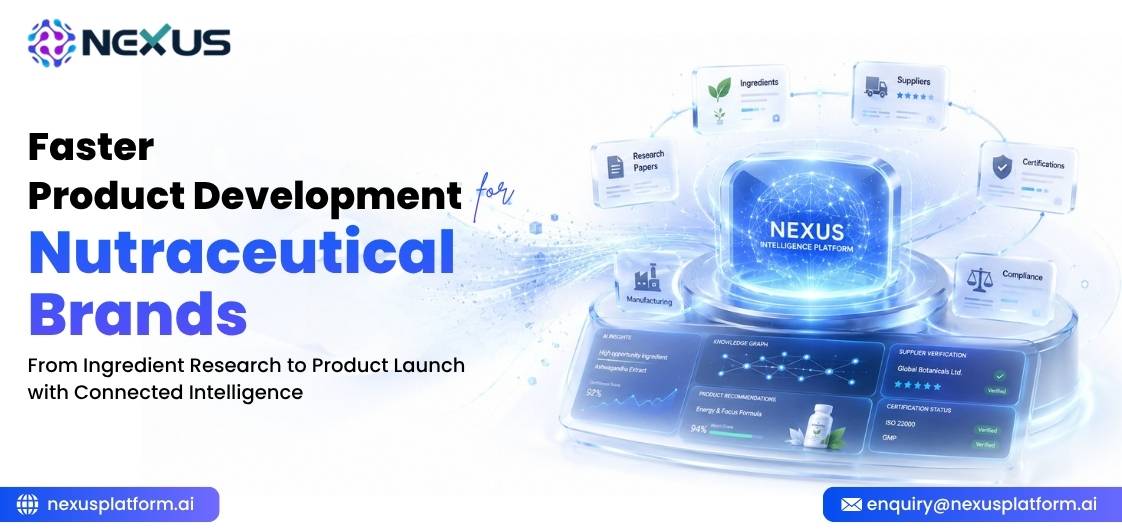
Nexus strengthens product development cycles by giving teams access to structured intelligence across four areas: companies, decision-makers, products, and ingredients. Instead of combining multiple external sources, teams use one platform designed to support sourcing, validation, and compliance work.
AI-powered prospect extraction gives teams supplier lists filtered by ingredient type, certification status, region, and company profile, reducing time spent on initial data gathering. Unified industry intelligence means ingredient listings, supplier information, and certification records sit together in one environment, reducing errors and improving consistency across sourcing tasks. Verified certification records give procurement, compliance, and R&D teams accurate certification details attached to companies and facilities during evaluation. AI-driven data validation lets teams upload internal spreadsheets without worrying about format or structure, since Nexus identifies duplicates, missing fields, and formatting errors from the start.

What Comes Next for Nutraceutical Product Development
The next phase of product development will rely heavily on consistent data workflows, real-time supplier and certification verification, AI-supported research steps, and flexible sourcing models grounded in structured intelligence.
Brands operating with unified datasets and dependable verification frameworks will move the fastest. Their advantage comes from accuracy, clarity, and the ability to make decisions without delays.

Also Read: How Sales Teams in Nutraceuticals Can Get 3x More Qualified Leads
Conclusion
Product innovation today relies on precise ingredient information, consolidated supplier data, and dependable certification records. Teams using unified systems, structured datasets, and AI-supported workflows operate with fewer bottlenecks and clearer decision-making paths.
Platforms such as Nexus support this model by bringing sourcing intelligence, ingredient data, and documentation into one environment. These practices are increasingly defining the pace at which top brands move from concept to final product.