A company can have a perfect product, a strong sales team, and a large market opportunity, yet still struggle to generate quality leads. The reason is simple: not every company in the market is a potential customer. A fast-growing SaaS company has very different needs from a small local business, and an enterprise organization may have the budget but require a completely different sales approach. The difference lies in understanding the companies behind the data, which is exactly what firmographic data is built to do.
What is Firmographic Data?
Firmographic data refers to company-level information that helps businesses categorize and understand organizations based on specific characteristics. Instead of looking at individual people, firmographic data focuses on the business itself, answering questions like which industry a company belongs to, how large the organization is, where it is located, and whether it matches an ideal customer profile (ICP).
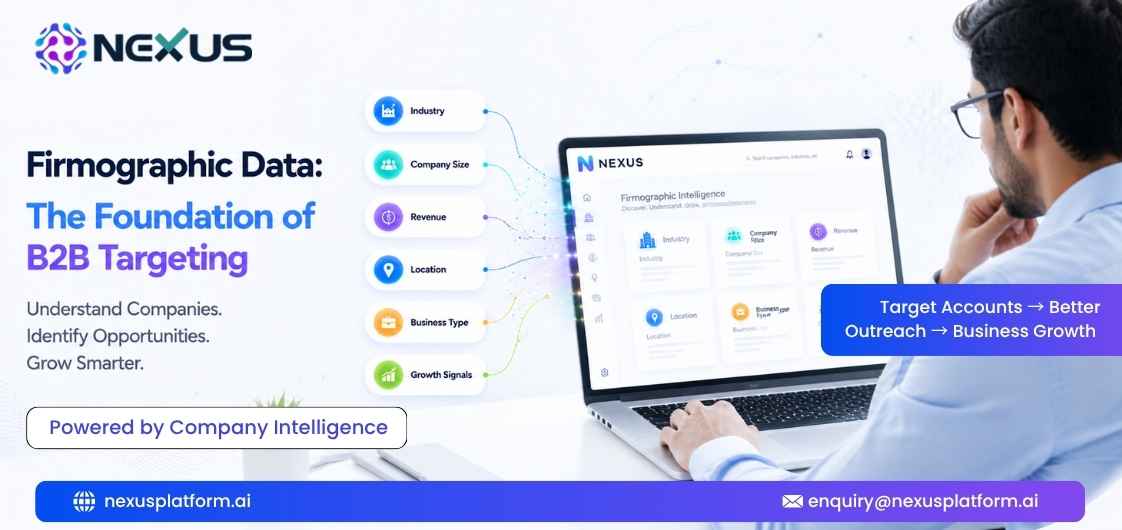
Common examples of firmographic data include industry, company size, revenue, location, business type, and company structure. For B2B teams, this information creates the foundation for identifying the right accounts and focusing resources where they matter most, which is why firmographic data for B2B targeting sits at the center of most account-based strategies.
Why is Firmographic Data Important for B2B Targeting?
B2B markets often include thousands or even millions of potential companies. Without the right information, sales teams spend time pursuing accounts that were never likely to convert. Firmographic data helps businesses move from broad targeting to focused account selection by identifying high-value accounts, improving lead qualification, personalizing outreach, and building stronger sales strategies.
In other words, firmographic data helps businesses answer one core question: which companies should we actually focus on.
Key Elements of Firmographic Data
Industry identifies the sector a company operates in, such as SaaS, healthcare, manufacturing, finance, or retail. Understanding industry helps businesses identify which markets are most relevant to their product and avoid irrelevant outreach. A software company targeting healthcare organizations, for example, needs to focus specifically on companies operating within that ecosystem.
Company size provides insight into the scale of an organization, including employee count, number of locations, and overall business scale. Company size segmentation matters because different organizations have different needs: a small business may look for affordability and simplicity, while a larger enterprise prioritizes scalability and advanced solutions.
Revenue provides an understanding of a company's financial scale and purchasing potential, helping teams identify accounts based on buying capacity, growth potential, and market value. Revenue-based targeting lets B2B sales teams prioritize accounts with stronger potential for long-term business relationships, though revenue alone does not define a good customer. It works best combined with other firmographic factors.
Location plays an important role in B2B targeting, especially for companies operating across multiple regions. Location-based firmographic data, including country, state or region, and business presence, supports territory planning, market expansion, regional campaigns, and localized outreach. A company expanding into a new market can analyze businesses in that region before launching campaigns.
Business characteristics go beyond the basics to include business model, ownership type, growth stage, company structure, and market presence. These insights help teams understand how a company operates and whether it aligns with their target market.
Firmographic Data vs Demographic Data and Other B2B Data Types
Firmographic data is often confused with demographic data, but the two describe different things entirely. Demographic data describes individual people: age, job title, seniority, or personal background. Firmographic data describes the business itself: industry, size, revenue, and structure. A B2B campaign might use demographic data to understand who a decision-maker is, but it needs firmographic data to understand whether their company is worth targeting in the first place.

Also read: The State of B2B Data Intelligence in 2026: 5 Trends Every Business Should Watch
How Firmographic Data Improves B2B Targeting
Firmographic data allows businesses to group companies based on shared characteristics such as industry, company size, location, and revenue range, which makes campaigns more focused and relevant. It also supports more personalized outreach, since a company's needs often depend on its size, industry, and business model, letting teams approach prospects with real context instead of a generic message.
Accurate firmographic data also improves sales efficiency. Sales teams spend valuable time researching prospects manually, and reliable firmographic data reduces that research burden, allowing teams to focus on accounts with higher potential. This directly improves prospect prioritization, sales productivity, and ultimately conversion opportunities.

How Nexus Helps Businesses Use Firmographic Data
Finding the right companies requires more than collecting information. Businesses need organized, accurate, and actionable company insights. Nexus helps teams discover relevant companies, analyze company characteristics, identify potential accounts, and improve B2B targeting strategies by bringing company information into a single intelligence layer, enabling sales and marketing teams to make better decisions and build more focused growth strategies.
As competition increases, businesses need smarter ways to identify opportunities. Firmographic data creates the foundation for understanding markets, defining ideal customers, and reaching the right accounts, and when combined with other intelligence signals, it helps businesses build more efficient and predictable go-to-market strategies.
also read Why Company Data Quality Determines Business Growth
The Role of Firmographic Data in Modern B2B Growth
As competition increases, businesses need smarter ways to identify opportunities.
Firmographic data creates the foundation for understanding markets, defining ideal customers, and reaching the right accounts.
When combined with other intelligence signals, it helps businesses build more efficient and predictable go-to-market strategies.
Conclusion
Firmographic data is the foundation of effective B2B targeting. By understanding company characteristics such as industry, size, revenue, location, and business structure, organizations can identify better opportunities and build more personalized strategies.
For modern B2B teams, accurate firmographic data improves targeting, increases sales efficiency, and supports sustainable business growth, especially when it is combined with the contact and technographic data that fill in the rest of the picture.