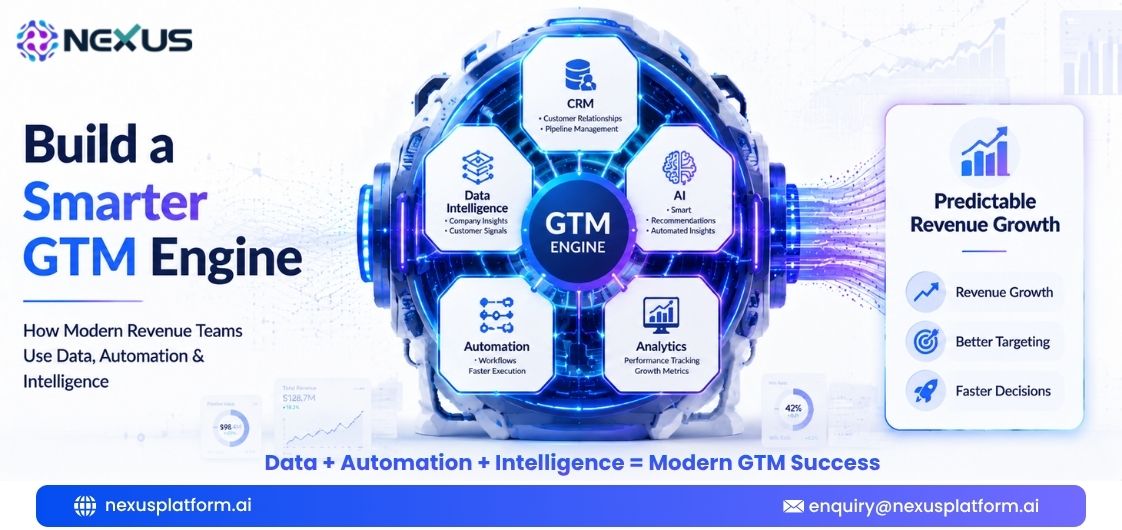
Building a successful business today requires more than just creating a great product. Companies need a clear strategy to reach the right customers, communicate value effectively, and convert opportunities into long-term relationships. This is where GTM teams come in.
A modern go-to-market strategy brings together different teams across an organization to ensure everyone is working toward the same revenue goals. Instead of operating separately, marketing, sales, product, and customer success teams collaborate to create a connected customer journey.
As markets become more competitive, businesses are relying on GTM teams to improve targeting, increase efficiency, and make smarter decisions using accurate data and insights.
What Is a GTM Team?
A GTM team(Go-To-Market team) is a group of professionals responsible for taking a product or service to the right audience and driving business growth.
Unlike traditional departments that work independently, GTM teams focus on the entire customer lifecycle from identifying ideal customers to acquiring, converting, and retaining them.
A strong GTM strategy helps businesses answer important questions:
- Who is our ideal customer?
- What problems are we solving?
- How should we position our offering?
- Which channels will reach our audience?
- How do we turn prospects into customers?
By aligning these decisions across teams, businesses can create a more efficient and predictable growth engine.
What Are the Core GTM Functions?
A successful GTM approach depends on collaboration between multiple business functions. Each team plays a role in bringing products to market and improving revenue outcomes.
Product Marketing
Product marketing connects the product with customer needs. It focuses on understanding the market, defining positioning, creating messaging, and helping customers understand the value of a solution.
Key responsibilities include:
- Market research
- Customer insights
- Competitive analysis
- Product positioning
- Sales enablement
Product marketing ensures that the product message matches what customers actually need.
Marketing
Marketing teams create awareness and generate demand among potential customers. They identify target audiences and develop campaigns that attract and educate prospects.
Marketing responsibilities include:
- Content creation
- Demand generation
- Brand building
- Campaign management
- Lead generation
A well-aligned marketing team helps the business reach the right audience at the right time.
Sales
Sales teams turn opportunities into revenue. They engage with prospects, understand their challenges, and guide them through the buying process.
Sales responsibilities include:
- Prospecting
- Customer conversations
- Solution demonstrations
- Negotiations
- Closing deals
When sales teams work closely with marketing and product teams, they can deliver more personalized customer experiences.
Customer Success
Customer success teams focus on helping customers achieve their goals after purchase.
Their role includes:
- Customer onboarding
- Relationship management
- Product adoption
- Retention strategies
- Expansion opportunities
A strong customer success function helps businesses build long-term customer relationships.
Revenue Operations (RevOps)
Revenue Operations brings together processes, technology, and data across marketing, sales, and customer success.
RevOps helps revenue teams improve:
- Workflow efficiency
- Data accuracy
- Performance tracking
- Decision-making
With better operational alignment, businesses can identify growth opportunities and remove bottlenecks.

Also Read: How to Find Verified Ingredient Suppliers Faster
Why GTM Team Alignment Matters
Many businesses struggle because their teams operate in separate systems with different goals. Marketing may focus on generating leads, while sales focuses on closing deals, creating gaps in the customer journey.
Strong sales and marketing alignment helps businesses:
- Improve customer targeting
- Create consistent messaging
- Reduce wasted resources
- Increase conversion rates
- Improve customer experiences
When all GTM functions work together, teams can make faster decisions and respond better to market changes.

Also Read: Why Company Data Quality Determines Business Growth
Common Challenges GTM Teams Face
Even well-established GTM team scan face challenges such as:
Lack of Customer Understanding
Without accurate customer insights, teams may target the wrong audiences or create messaging that does not connect.
Data Silos
When customer and company information is scattered across multiple tools, teams struggle to access reliable insights.
Poor Team Communication
Misalignment between sales, marketing, and product teams can slow down execution.
Difficulty Prioritizing Opportunities
Without the right intelligence, teams may spend time pursuing accounts that are unlikely to convert.
How Data Intelligence Helps GTM Teams Succeed
Modern GTM teams depend on accurate data to identify opportunities and make informed decisions.
Company intelligence platforms help teams understand:
- Which companies match their ideal customer profile
- Who the key decision-makers are
- Which markets offer the best opportunities
- How accounts fit their growth strategy
With access to reliable business intelligence, teams can move beyond assumptions and build a more focused GTM strategy.
Platforms like Nexus help businesses discover verified company data, analyze opportunities, and support smarter revenue decisions.
The Future of GTM Teams
The future of GTM teams will be driven by better collaboration, automation, and intelligence.
As businesses adopt AI and advanced analytics, GTM functions will become more connected. Teams will spend less time collecting information manually and more time using insights to create personalized customer experiences.
Companies that combine strong GTM processes with reliable data will be better positioned to adapt, compete, and grow.